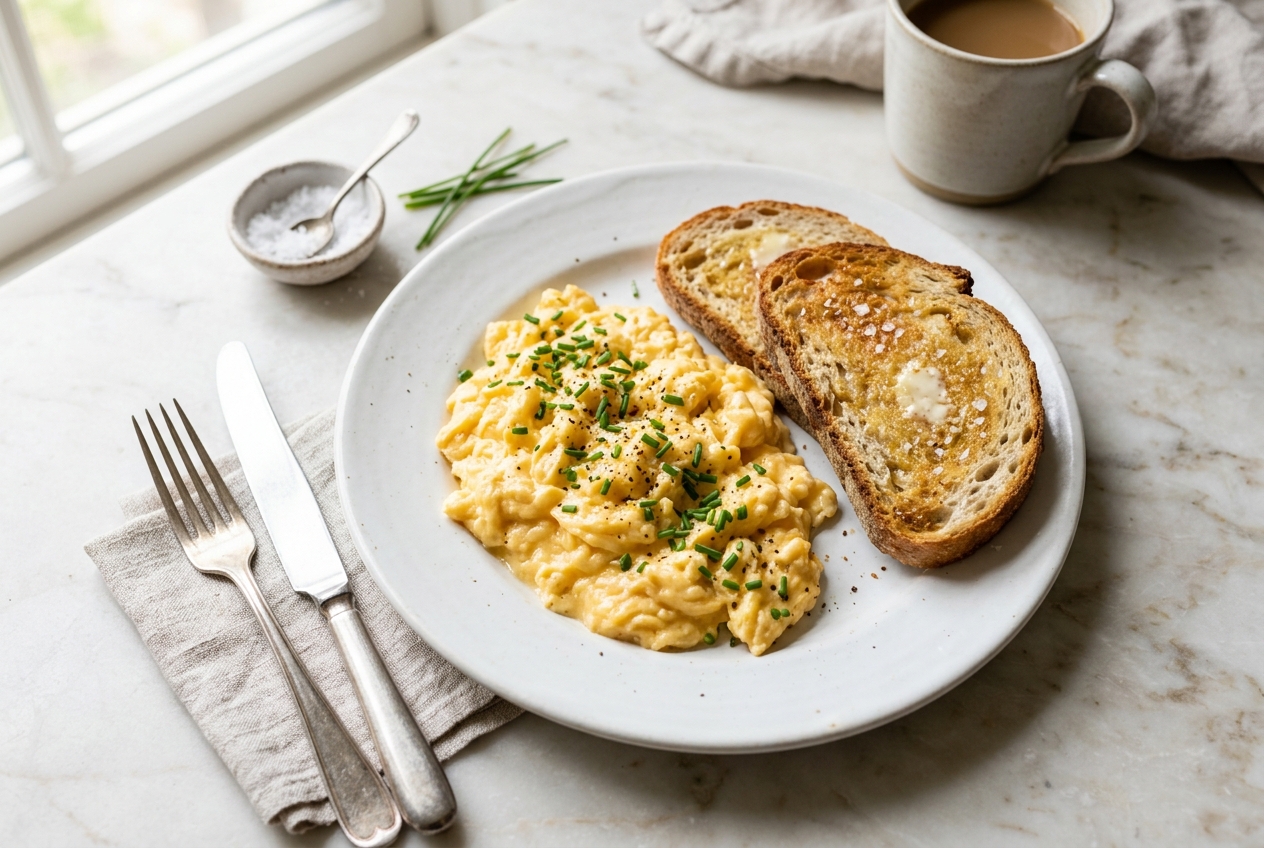
Perfect Scrambled Eggs
Low and slow is the secret to scrambled eggs that are creamy, not rubbery. Constant stirring over gentle heat creates small, soft curds that stay tender. Pull them off the heat while they still look slightly wet — carryover cooking finishes the job.
Breakfast · Vegetarian • 10 min
Ingredients
- 4 large eggs
- 1 tablespoon unsalted butter
- 2 tablespoons whole milk or heavy cream (optional, for a softer set)
- ¼ teaspoon kosher salt, plus more to taste
- Freshly ground black pepper
- Chives, finely sliced, for garnish (optional)
Get Our Free 5-Ingredient Summer Dinners PDF
10 effortless recipes with 5 ingredients or fewer — delivered to your inbox, plus one thoughtful recipe every week.
Steps
- Crack eggs into a bowl. Add milk or cream if using and ¼ teaspoon salt. Whisk until fully homogenous and slightly frothy, about 30 seconds.
- Melt butter in an 8-inch nonstick skillet over medium-low heat until foamy.
- Pour in eggs. Using a silicone spatula, push slowly from edges toward center, forming soft curds. Continue until eggs are about 80% set, 2–3 minutes.
- When eggs are mostly set but still glossy, remove from heat. Residual heat will finish cooking to a soft, creamy texture.
- Season with pepper, top with chives, and serve immediately.
Tips & Variations
Make Ahead
Scrambled eggs do not hold well. Prep by cracking eggs into a bowl and covering — they can sit at room temperature for up to 30 minutes before cooking.
Storage
Not recommended. Scrambled eggs weep liquid and turn rubbery when reheated. If you must, refrigerate and eat cold in a sandwich within 1 day.
Substitutions
Salted butter works — just reduce the added salt to a pinch. Goat cheese or crème fraîche stirred in at the end (off heat) makes them extra rich. Dairy-free: use olive oil instead of butter and skip the milk.
Reviews
Reviews coming soon! In the meantime, let us know what you think of this recipe.
Shop This Recipe
The Measuring Cup earns a commission from qualifying purchases at no extra cost to you. We only recommend tools we use in our own kitchen.