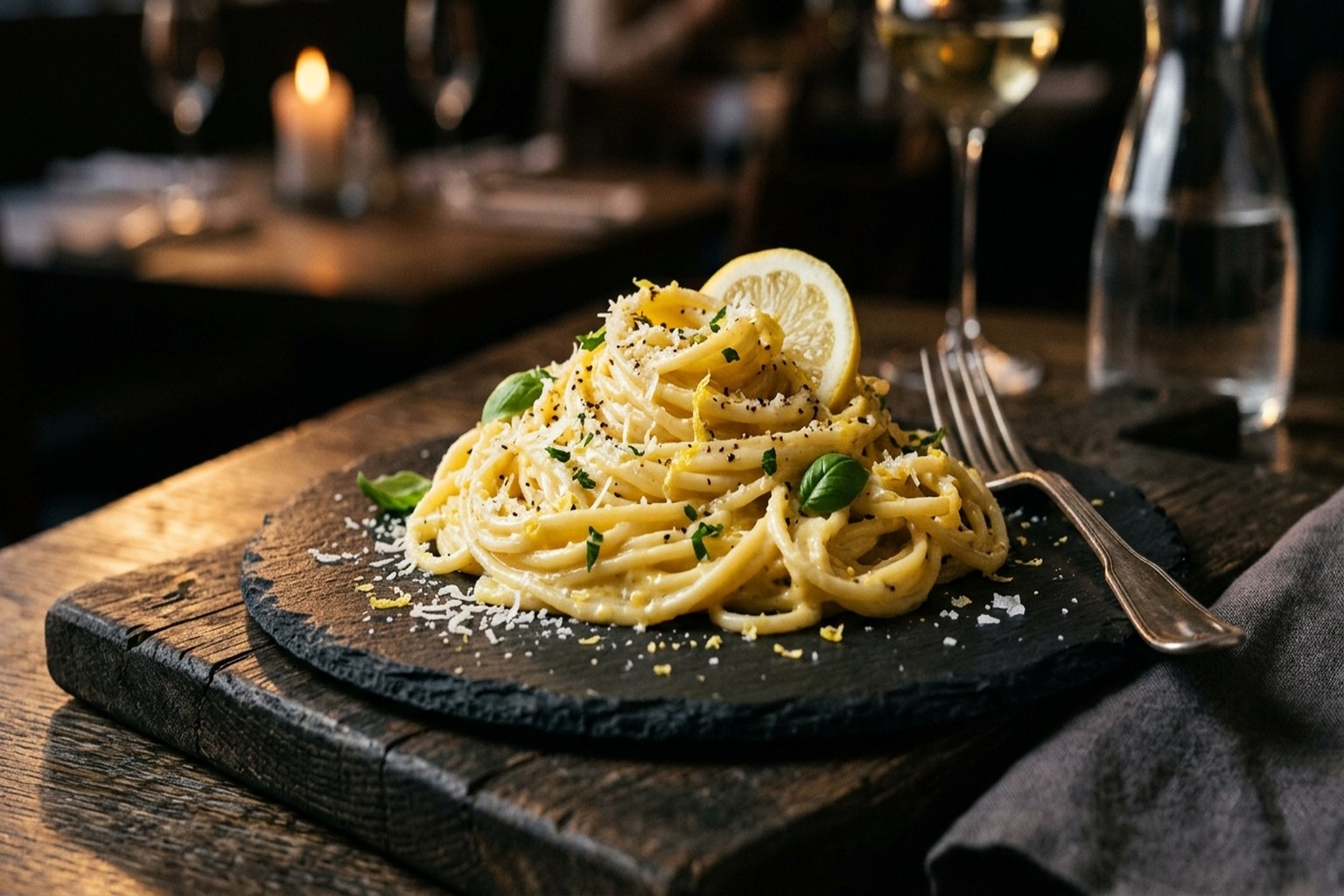
Frozen Lemon Pasta
Frozen lemon-juice cubes blitzed with Parmesan, olive oil, and garlic turn into a shockingly creamy, impossibly bright sauce — no cream, no butter, and no stove time beyond boiling the pasta. The cubes emulsify with the cheese and oil into something that tastes like a cross between cacio e pepe and lemon Alfredo, but lighter, fresher, and completely foolproof. Make a tray of lemon cubes on Sunday and you have instant summer dinner all week. Serve with a side of Grilled Corn Salad for the ultimate heat-wave meal.
Dinner · No-Cook Sauce, Vegetarian, Summer · 20 min
Ingredients
- ½ cup fresh lemon juice (from about 3–4 large lemons), frozen into ice cubes overnight
- 1 pound spaghetti, linguine, or bucatini
- 1 cup freshly grated Parmesan cheese, plus more for serving
- ⅓ cup extra-virgin olive oil, plus more for drizzling
- 2 cloves garlic, peeled
- 1 teaspoon lemon zest
- ½ teaspoon kosher salt, plus more for pasta water
- ¼ teaspoon freshly ground black pepper
- Pinch of red pepper flakes (optional)
- ¼ cup reserved pasta water, plus more as needed
- Fresh basil leaves, torn, for garnish
Get Our Free 5-Ingredient Summer Dinners PDF
10 effortless recipes with 5 ingredients or fewer — delivered to your inbox, plus one thoughtful recipe every week.
Steps
- At least 4 hours ahead (ideally overnight): Pour the fresh lemon juice into an ice cube tray and freeze until solid. You should get about 6–8 cubes depending on tray size.
- Bring a large pot of water to a rolling boil. Salt it generously — it should taste like the sea. Cook the spaghetti according to package directions until al dente. Reserve 1 cup of pasta water before draining.
- While the pasta cooks, combine the frozen lemon cubes, grated Parmesan, olive oil, garlic cloves, lemon zest, salt, black pepper, and red pepper flakes (if using) in a high-speed blender or food processor.
- Blend on high for 30–45 seconds until the mixture transforms into a thick, creamy, pale-yellow sauce. The frozen lemon will emulsify with the oil and cheese — it should look like a loose mayonnaise. Scrape down the sides as needed.
- Add ¼ cup of the reserved hot pasta water to the blender and pulse a few times to loosen the sauce. It should be smooth and pourable but still thick enough to coat the back of a spoon.
- Return the drained pasta to the pot (off the heat). Pour the lemon sauce over the pasta and toss vigorously with tongs until every strand is coated and glossy. If the sauce seizes up, add another splash of pasta water and keep tossing — the starch in the water helps bind everything.
- Taste and adjust salt, pepper, or lemon zest. Divide among bowls, finish with a drizzle of olive oil, extra Parmesan, torn basil, and a few more red pepper flakes if you like heat. Serve immediately.
Tips & Variations
Make Ahead
The lemon ice cubes can be frozen up to 2 weeks in advance — keep a tray in the freezer for instant pasta sauce. You can also blend the sauce (through step 4) up to 2 days ahead and refrigerate in an airtight container. Let it come to room temperature and thin with hot pasta water when tossing.
Storage
Leftover pasta keeps in an airtight container in the refrigerator for up to 3 days. The sauce will tighten when cold — reheat gently in a skillet with a splash of water or milk, tossing constantly. The microwave works but can make the sauce separate; a quick stovetop reheat gives better results. Not suitable for freezing — the emulsified sauce will break.
Substitutions
No time to freeze lemon cubes? Blend fresh lemon juice with 3–4 regular ice cubes and an extra tablespoon of Parmesan for a close approximation, though the texture won't be quite as creamy. Pecorino Romano works in place of Parmesan for a sharper, saltier finish. Gluten-free spaghetti works perfectly. For a protein boost, toss in shredded rotisserie chicken or sautéed shrimp. Add a handful of baby spinach or arugula that wilts into the hot pasta.
Reviews
Reviews coming soon! In the meantime, let us know what you think of this recipe.